February 9, 2023 | By: Karine K. Sardagna
Share
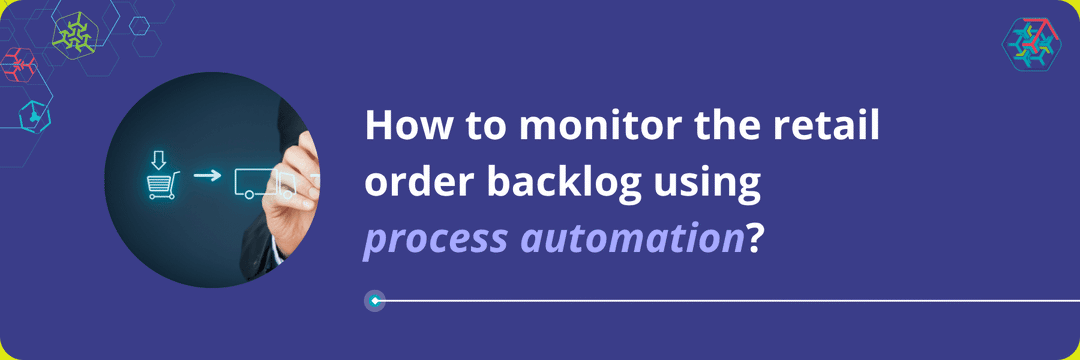
Understanding How Process Automation Can Benefit Retail Companies, Especially When It Comes to Monitoring Order Balances
Anyone who works in retail companies knows better than anyone the importance of achieving higher productivity and avoiding manual processes, given that the loss of information harms the operation as a whole, right?
The common goal for everyone working in this sector is the same: to avoid operational errors and delays in the receipt or delivery of goods. These problems can be easily solved when we use process automation, which is nothing more than making actions that were previously performed manually operational, using system and data integration to do so.
With this in mind, we brought this special content to show how you can use automation to improve your operation. Keep reading the article to learn more!
Automation is the set of actions whose main objective is the improvement of internal processes through the use of technology and innovation. In other words, it helps improve the flow of work in a company, as it replaces manual processes with automated ones, using software and systems that support the most varied activities.
These activities can range from product manufacturing to its delivery to the final consumer. Automation involves investing in platforms and strategies that transform manual activities into digital processes, reducing errors and providing more agility.
Without automation, several people would perform the same process at the same time, and, in this scenario, the chances of error are much greater than when these activities are automated and organized by a single system for a specific function.
The premise of automation is to simplify and remove as much manual work as possible, which directly impacts retail operations. See below for the main benefits of using it in this niche.
The list of people who benefit from process automation is extensive, covering everyone responsible for the success of a retail business, from the manager to the shopkeeper and the final customer who buys and consumes the products.
The growth of a retail business occurs when we combine strategic actions with the reduction of operational costs and the cutting of manual processes that hinder productivity.
Planning the automation process offers the possibility of centralizing data on a single platform, where we have complete integration. From this, it is possible to build a more efficient and strategic management structure, based on data and with better results.
See below for the main benefits of relying on process automation in retail logistics:
The receipt of products in companies of all sizes can be a complex process. When it comes to retail, the mission involves hundreds of products, logistics, and storage, and if done manually, this can disrupt execution.
Using integrated systems can help the workflow, ensuring that supply teams manage order balances and replenishment automatically.
The receipt of goods is part of the success of the logistics operation, impacting the entire supply chain. Yard management starts long before the product arrives at the warehouse, so automating order monitoring is an action that should be prioritized.
When a business has real visibility of what will be received, it can program all logistics in an optimized way. However, when control is manual, the tendency is for failures to occur, ranging from problems in receiving products to delays and stock rupture for the final customer.
Like any process operated by people, the receipt of goods can also have failures.
Currently, there are technologies on the market that help minimize these errors. The automation and integration of data and support tools are fundamental to achieving the best results.
Contrary to what many people think, modernizing and automating actions is related to simplifying tasks, not the sophistication of processes. That is, investing in software that optimizes procedures is very important to increase a company's productivity.
With solutions like the Tempo Certo system, you receive a goods order with quantity x of each item, and at the time of scheduling, the supplier informs the quantity that will be delivered, item by item, which helps you have better organization of what and when will be received.
Our system controls the quantity delivered by the supplier, aligning it with the order quantity. This helps your business go further in controlling the stages of the logistics operation.
To help your company advance, revolutionizing the receipt of deliveries, visit our website and see how our solution can help optimize your day-to-day.
Discover the system and transform your company's yard management!
Share
Contents
See also
Complete the form and a member of our team will be in touch shortly.
We respect your privacy and will never share your information with third parties.
 Monday to Friday - 9:00am to 5:30pm
Tempo Certo Soluções em Softwares Ltda | © All rights reserved
Made by: