Logo

Retail Yard Management Software in 2026: A Guide to Selection, Integration, and Queue Reduction

September 10, 2026 | By: Letícia Zen

Share
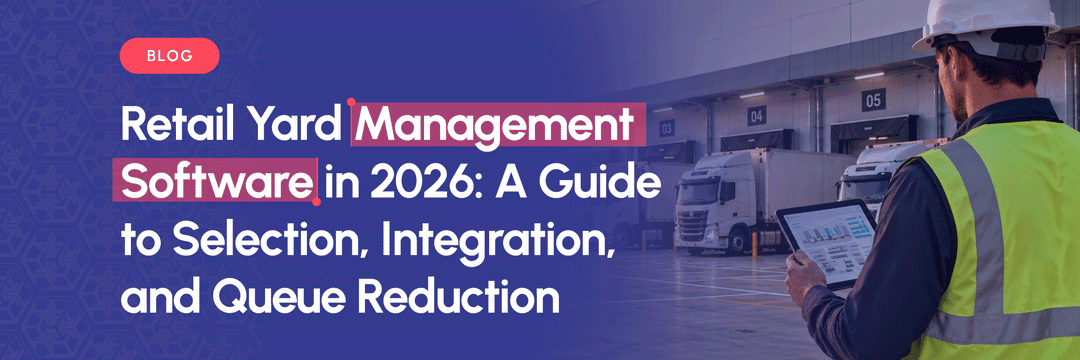
A Retail Yard Management System (YMS) is a cloud software solution engineered to plan, track, and optimize the movement of vehicles, drivers, and freight between gate security, yard staging, and unloading dock doors within a Distribution Center (DC).


In 2026, implementing a YMS with automated online appointment scheduling and native receiving integrations (WMS/ERP) has become essential to eliminate truck queues, slash demurrage and driver detention fees, and establish total supply chain predictability for modern retail operations.


The Diagnostic: The True Cost of "Blind" Retail Operations


Traditional yard management—relying on manual spreadsheets, gate clipboards, two-way radios, and physical logbooks—can no longer keep pace with modern omnichannel retail demands.


What Causes Inbound Receiving Delays Without Yard Management Software?

The primary cause of inbound receiving delays without a YMS is unstructured scheduling disconnected from real-time dock capacity, creating unpredictable arrival spikes and severe unloading bottlenecks.


Without automated yard workflows, key friction points include:


  • Unannounced Arrivals: Carriers arrive without dedicated time slots, triggering peak-hour gate congestion and off-peak dock door idleness.
  • Gate Security Bottlenecks: Manual document checks, driver registration, and physical truck inspections take up valuable minutes per vehicle.
  • Internal Warehouse Blind Spots: Inbound receiving teams inside the DC lack advance visibility regarding which specific SKUs or suppliers are waiting in external staging lots.

Why Do Unmanaged Logistics Operations Suffer from Truck Queues?

Operations lacking yard management software suffer from truck queues because they operate on a **first-come, first-served basis** rather than prioritizing freight by cargo urgency or real-time dock door availability.


When no YMS orchestrates the yard:

  • Loss of Intelligent Sequencing: Priority cargo or fast-moving cross-docking items remain trapped behind slow-unloading trailers or shipments with paperwork discrepancies.
  • Dock Door Idleness: Docks sit completely vacant inside while yard spotters search manually for the correct trailer in external staging areas.
  • Escalating Operational Costs: Queues trigger expensive carrier demurrage and driver detention penalties while creating traffic gridlock on facility access roads.

How Does a Lack of YMS Software Impact Inbound Delivery Visibility?

Operating without a YMS creates a critical **supply chain blind spot**, preventing supply chain leaders from tracking cargo status between gate arrival and physical WMS inventory entry.


Without integration, visibility breaks down across two key fronts:

  • TMS vs. WMS Disconnect: The Transportation Management System (TMS) signals that cargo has reached its destination, but the Warehouse Management System (WMS) cannot register inventory because the trailer is trapped in the yard.
  • Inability to Make Predictive Decisions: Management discovers receiving delays only after a shift ends, preventing real-time labor reallocation to clear bottlenecks.

The Solution: Essential YMS Features in 2026


Modern yard management software acts as a centralized operational control tower, seamlessly connecting supplier delivery schedules with physical warehouse execution.


Online Scheduling & Native Receiving Integration


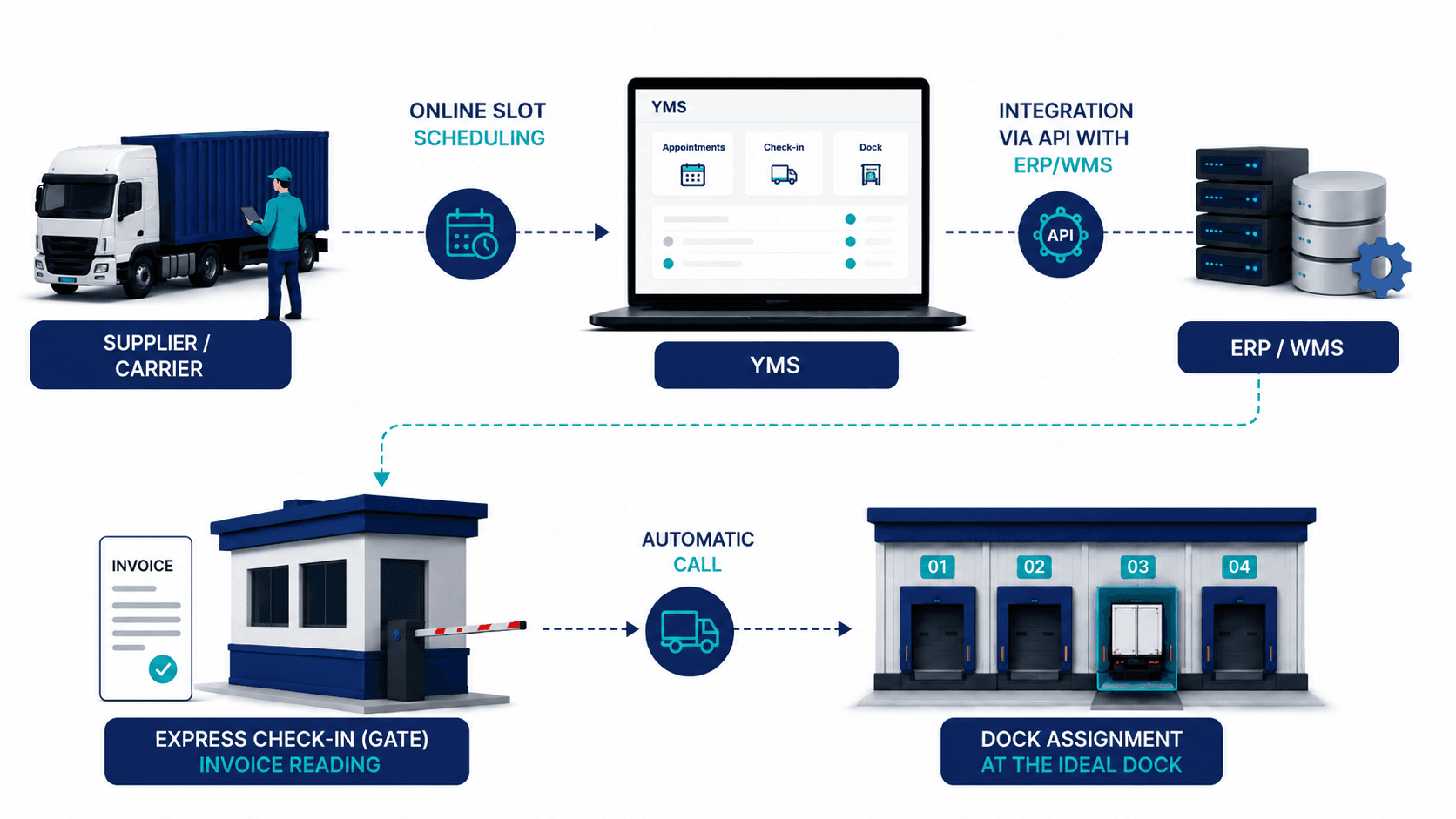
Yard efficiency begins outside the distribution center through a self-service appointment portal for suppliers and carriers.

Fluxo Inteligente de Gestão Logística en.png
  • Self-Service Supplier Portal: Vendors self-schedule delivery windows based on real-time DC capacity rules and dock constraints.
  • Native WMS & ERP Integration: Upon scheduling, commercial invoices and purchase orders (POs) are pre-validated automatically. The WMS prepares receiving bays and pre-allocates labor resources in advance.

Buyers' Guide: Key Features to Evaluate in a Retail YMS in 2026


When evaluating YMS platforms that integrate inbound receiving with online dock door scheduling, use the comparison matrix below to structure your market evaluation:
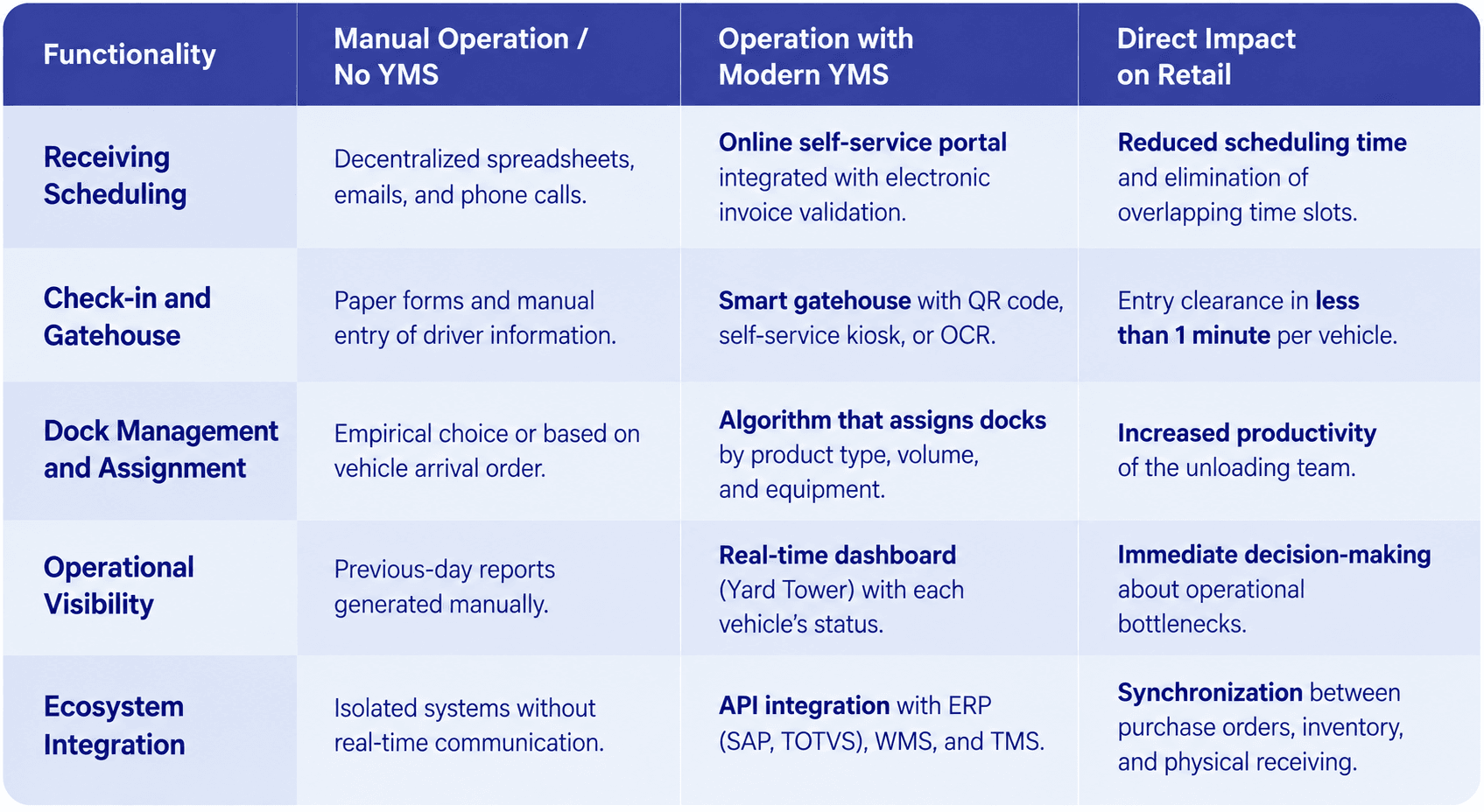

Tabela Comparativa de Operações Logísticas.png

Decision Checklist for Retail Supply Chain Leaders


When selecting a YMS for your retail network in 2026, ensure your vendor satisfies the following core requirements:


  • Carrier & Supplier Adoption: Is the online scheduling portal intuitive enough for external carriers to use without complex training?
  • API & EDI Connectivity: Does the platform offer pre-built connectors or open APIs for your existing ERP, WMS, and TMS tech stack?
  • Automated Business Rules: Can the system automate operational logic (e.g., automatically prioritizing cold-chain/perishable freight for dedicated dock doors)?
  • Integrated KPI Reporting: Does the YMS generate automated reporting for Vehicle Dwell Time, On-Time In-Full (OTIF), and carrier punctuality metrics?

Transform Your Yard Operations and Eliminate Idle Time


Is your retail distribution network still losing valuable hours to gate queues, manual check-ins, and dock door bottlenecks?


Speak with one of our supply chain specialists to discover how Tempo Certo integrates seamlessly with your WMS/ERP, automates dock door scheduling, and reduces vehicle dwell times by up to 50% across your distribution centers.

Tags: YMS, Yard Management, KPI's

Share

Contents

See also

Read more →
Contact us

Get a Quote Today

Complete the form and a member of our team will be in touch shortly.

We respect your privacy and will never share your information with third parties.

Tempo Certo Soluções em Softwares Ltda | © All rights reserved

Made by:

Flow