April 17, 2026 | By: Letícia Zen
Share
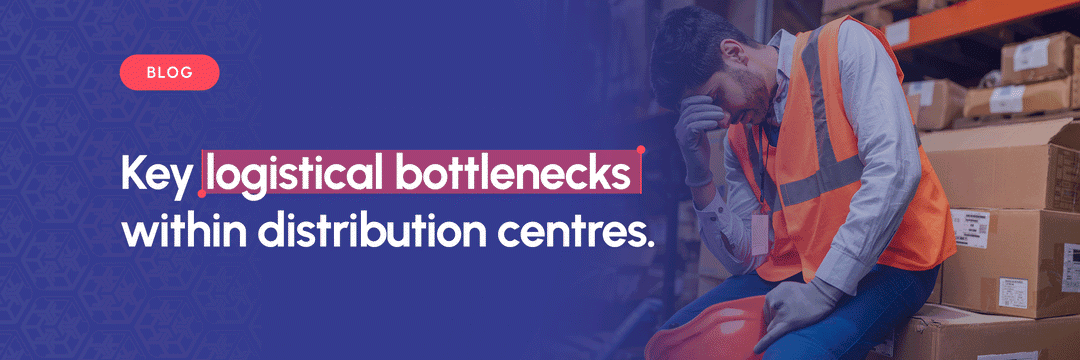
Distribution centers are essential structures for ensuring that products reach their destination efficiently and on time. However, as order volumes increase and operations become more complex, keeping the logistical flow organized has become a constant challenge.
When communication failures occur between operational stages or there is a lack of visibility regarding what happens in the yard and at the docks, the impacts surface quickly: delays, increased costs, and reduced productivity.
The majority of bottlenecks in distribution centers are related to a lack of integration between processes, teams, and systems. In this scenario, efficient yard and vehicle flow management becomes a strategic factor in avoiding delays and maintaining predictable operations.
In this article, we highlight the main logistical bottlenecks found in distribution centers and how technology can help mitigate these issues. Check it out!
Distribution centers focus on various logistical activities that must occur in sync: goods receiving, warehousing, order picking, and shipping. When one of these stages suffers delays or communication gaps, the entire operational flow is impacted.
The results can range from trucks waiting for service to delays in final delivery to the customer. Common causes include manual processes, lack of operational visibility, and difficulty coordinating between carriers, yard teams, and the warehouse.
One of the most common problems in distribution centers is the formation of truck queues waiting for entry or dock service. Without proper vehicle flow organization, carriers arrive simultaneously, causing yard congestion and operational delays.
Without structured dock scheduling, operations become reactive. At certain times, docks sit idle; at others, there is a vehicle overflow. This lack of predictability directly impacts team productivity and overall facility efficiency.
Another frequent bottleneck is the difficulty of tracking vehicle status and yard operations. Without real-time information, managers struggle to identify delays, reorganize priorities, or redirect trucks to available docks.
Distribution centers involve different teams: gatehouse, yard, warehouse, and transport. When these areas don't share integrated information, communication gaps lead to logistical friction. Trucks may be sent to occupied docks or wait for processes that aren't yet ready for receiving.
Without control over operational metrics, it becomes difficult to identify where the primary bottlenecks are. Indicators such as yard wait time, loading/unloading time, and total dwell time are fundamental for evaluating logistical efficiency and driving continuous improvement.
To handle increasingly complex operations, many companies are investing in technologies that help organize logistical flow within distribution centers.
A Yard Management System (YMS) is one of these solutions. The system was developed to manage yard activities from the moment a truck arrives until it departs after loading or unloading. With this technology, managers gain real-time visibility into vehicle movement, dock occupancy, and dwell time.
With Tempo Certo, the YMS can be integrated with various platforms, providing a single source of truth for all processes. Its user-friendly interface ensures the system is easily adopted into the daily routine of professionals.
This allows you to:
In addition to reducing operational bottlenecks, technology contributes to a more predictable and efficient logistics chain. By improving yard organization and increasing visibility, companies can reduce delays and offer a higher level of service.
Want to know how to improve logistical flow management in your distribution center? Get in touch with Tempo Certo and speak with our experts!
Share
Contents
See also
Complete the form and a member of our team will be in touch shortly.
We respect your privacy and will never share your information with third parties.
 Monday to Friday - 9:00am to 5:30pm
Tempo Certo Soluções em Softwares Ltda | © All rights reserved
Made by: