July 20, 2026 | By: Letícia Zen
Share

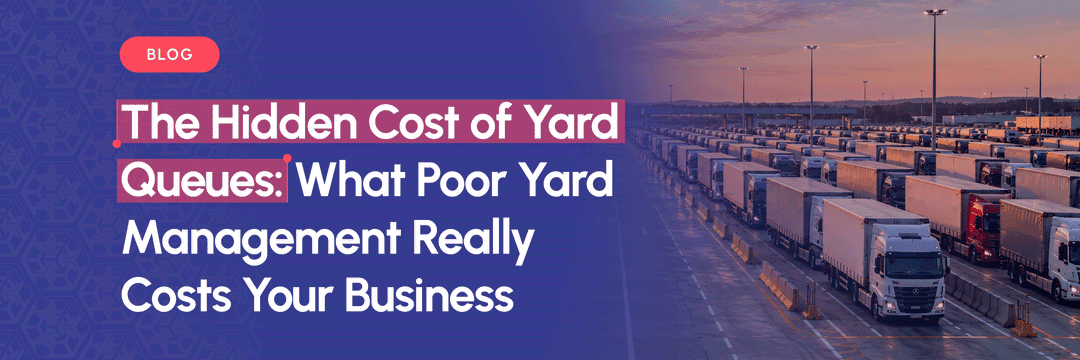
Logistics operational bottlenecks often begin long before a truck physically arrives at your facility gate. They stem from how the overall workflow was structured—ranging from imprecise dock scheduling and delaying document verification until gate entry, to unmonitored dock doors throughout the shift and a general lack of real-time operational visibility.
Trucks keep arriving, shipments keep moving, and facility teams adjust the yard flow as best as they can. Gradually, however, the entire shift loses its momentum. Here is what leads to truck queues in your yard and how to resolve the issue before it impacts your bottom line.
When dock door scheduling is poorly structured, facility teams feel the impact immediately upon carrier arrival. Vendors lack a clear delivery window, drivers are forced to wait, and gate security has to manage entry flows that rarely align with initial plans.
One vehicle arrives early, another arrives late, and several trucks show up during the exact same window. Day after day, the yard loses the predictable flow needed to sustain efficient operations.
It is an industry fact: yard operations become irregular without centralized dock door management.
In many facilities, drivers wait at the gate while dock doors sit completely empty inside. During peak arrival hours, teams are forced to manually reorganize assignments on the fly. This friction is rarely caused by a lack of physical infrastructure, but rather by unaligned dock allocation throughout the shift. The consequences are immediate: longer queue lines, increased idle dwell times, and constant operational disruptions.
When cargo and invoice verification happens strictly upon vehicle entry, any minor adjustment causes an operational standstill:
Resolving these issues while the truck sits idle at the gate causes queuing behind it. Because receiving cannot stop, warehouse teams are forced to continuously re-adjust schedules—turning emergency workarounds into a costly daily routine.
Without real-time flow tracking, facility management is stuck in a reactive cycle:
The turning point for this scenario is end-to-end operational visibility. Real-time insight allows logistics managers to spot potential delays before they compound, dynamically reallocate dock doors mid-shift, and maintain smooth flow without stopping facility throughput.
From the outside, operational friction is even more visible to vendors and carriers. Suppliers lose shipping predictability because receiving cadences fluctuate unpredictably. Drivers arrive without knowing how long they will wait—sometimes sitting idle far longer than expected or having to adapt to last-minute process changes. An unmanaged yard degrades operational stability for external partners as well.
Over time, these individual friction points accumulate into a snowball effect:
This is not an isolated problem in one specific department, but rather the cumulative result of operating without complete supply chain visibility.
When dock scheduling is structured, dock door door capacity is tracked in real time, document verification occurs prior to truck arrival, and the entire flow is visible end-to-end, the operational cadence transforms entirely.
Everyone gains stability: waiting times drop, last-minute emergencies are eliminated, and teams spend their shifts executing efficient workflows rather than improvising.
This is where yard management evolves from a simple back-office task into a strategic operational advantage.
Driven by a modern Yard Management System (YMS):
This eliminates cross-departmental friction, boosts delivery predictability, and avoids last-minute operational improvisations.
Remember: The operational bottleneck is rarely the yard itself—it is the lack of real-time visibility within it.
This is precisely where Tempo Certo comes in. We help companies gain complete visibility over their yard flows, empowering logistics leaders to make proactive decisions based on live operational data rather than past disruptions.
Share
Contents
See also
Complete the form and a member of our team will be in touch shortly.
We respect your privacy and will never share your information with third parties.
 Monday to Friday - 9:00am to 5:30pm
Tempo Certo Soluções em Softwares Ltda | © All rights reserved
Made by: