March 16, 2026 | By: Letícia Zen
Share
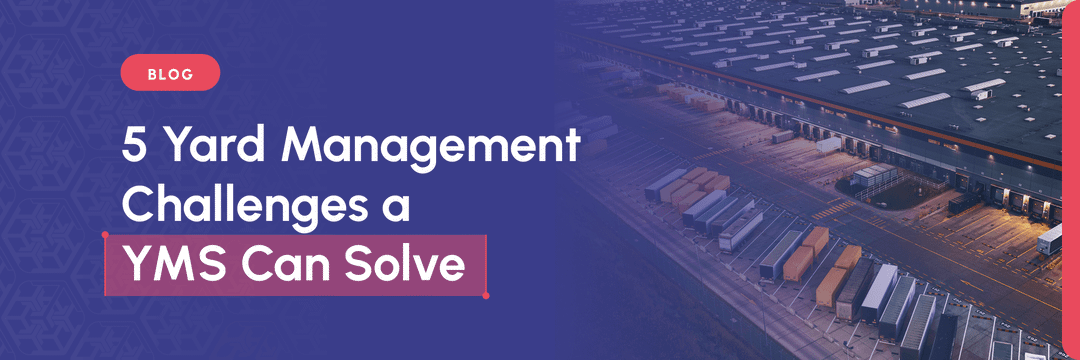
In many logistics operations, the yard is still treated as a secondary area. In practice, however, it functions as a true barometer of operational efficiency. When the yard stalls, the entire supply chain feels the impact: delays, congestion, rising costs, empty shelves, carrier conflicts, and lost productivity.
This is where a YMS (Yard Management System) makes the difference — delivering not just metrics, but real control over well-structured processes.
Below, we break down the five key yard management challenges and how technology can turn bottlenecks into strategic advantages.
One of the biggest challenges in yard operations is the absence of visibility into what's actually happening on the ground. Where is each vehicle? How long has it been idle? Which dock is occupied? Who is waiting for clearance?
Without structured data, decisions rely on spreadsheets, fragmented communication across multiple platforms, and informal messages. The result is unpredictability.
A YMS solves this by centralizing information and providing real-time operational monitoring. The system tracks every stage of the process, logs dwell times, and pinpoints bottlenecks with precision — reducing idle time at docks, improving vehicle allocation, and speeding up loading and unloading.
Long truck queues mean extra costs, wasted time, disorganization, and strained supplier relationships. Detention fees, overtime, fuel consumption, driver dissatisfaction, and increased operational risk are just a few of the consequences.
A YMS introduces self-scheduling and intelligent time-window management. It allows carriers to book digitally, following rules based on capacity, cargo type, and operational priority. The yard team also receives real-time alerts to address delays proactively.
The result: fewer physical queues, better flow distribution throughout the day, fewer gatehouse conflicts, and significantly greater operational predictability.
Another common mistake is treating the yard as an isolated system. When it isn't integrated with other management platforms, information gaps emerge that compromise the entire operation — vehicles arrive without a scheduled dock, there's no visibility between inventory, warehouse, and incoming orders, and priorities are unclear.
Data integration eliminates rework and reduces human error. With Tempo Certo's YMS, integration means real-time synchronization between vehicle arrivals and load availability, with reliable information flowing securely across all departments.
Many operations track shipment volumes but fail to measure yard-specific indicators. Average dwell time, dock occupancy rate, carrier delay index, and internal lead time are metrics that still aren't part of the daily routine in many companies.
Without structured KPIs, management loses its capacity to plan and negotiate effectively. A YMS consolidates strategic indicators and transforms the yard into a performance-driven area.
Drivers and carriers are integral to the operation, yet they often lack clear access to information about schedules, documentation, or release status. This misalignment creates friction, reduces transparency, and strains relationships with strategic partners.
A YMS improves communication and gives carriers greater autonomy — enabling them to schedule deliveries, track orders, receive status updates, and submit documents digitally. When logistics partners have predictability, the relationship strengthens. And that directly impacts supply chain efficiency.
Investing in a YMS isn't simply about digitizing processes. It's about transforming the yard into a strategic, connected, measurable, and data-driven area of your operation.
Want to learn how to transform your yard with simplicity and efficiency? Get in touch!
Share
Contents
See also
Complete the form and a member of our team will be in touch shortly.
We respect your privacy and will never share your information with third parties.
 Monday to Friday - 9:00am to 5:30pm
Tempo Certo Soluções em Softwares Ltda | © All rights reserved
Made by: