December 6, 2022 | By: Karine K. Sardagna
Share
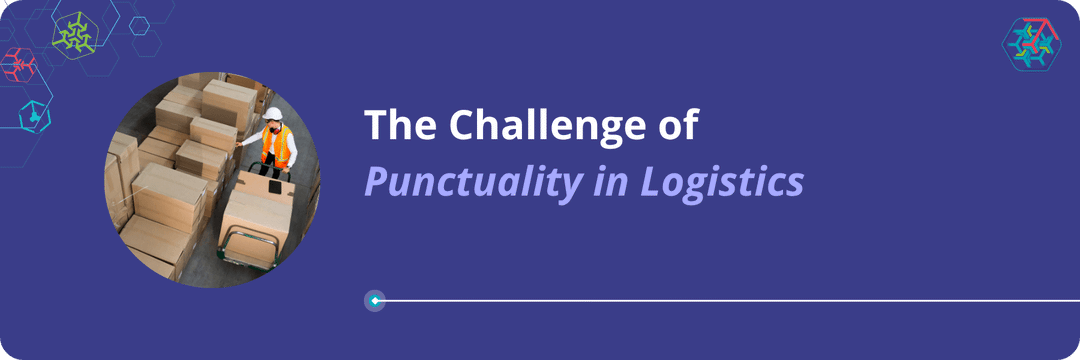
To ensure good logistics flow, punctuality is paramount. Keep reading to learn about the main challenges and how to solve them.
Punctuality in logistics is one of the biggest demands of the market, regardless of the segment of operation.
In retail, there are two very valuable assets: the product and the customer. And punctuality is the best way to respect and preserve them! Delays compromise the level of customer satisfaction, so the logistics process needs to be very well structured in order to avoid problems.
The challenges of punctuality start long before the final delivery, and there are several factors that impact it: integration between sectors, negotiation with suppliers, manufacturing, yard and inventory management, among other points, which are essential to guarantee punctuality rates. This control must be carried out from beginning to end, regardless of whether the company is B2B or B2C.
Keep reading the article to learn about the challenges of punctuality in logistics and how to solve them through technology.
Logistics is not just transportation, but a series of actions that occur beforehand and need to be aligned to ensure that, in the end, the customer receives what was ordered, with quality and punctuality.
Transportation is the movement of items, which goes from the truck leaving the yard to the order's delivery destination, and these items can range from inputs for manufacturing to finished products.
Logistics, on the other hand, covers all the planning and organization of the process so that the final stage, that is, transportation, is successful. It is responsible for efficient execution, and this involves receiving (or manufacturing products), warehousing, transportation, and delivery.
When the best logistics is not adopted, the result is a series of inconveniences. Among them, the yard full of trucks, teams with accumulated demands, merchandise rupture on the shelves, delays in supplier delivery, and many others.
The cause of punctuality problems that impact the logistics operation may be related to factors such as:
When we talk about retail, we need to consider the time it takes for the merchandise to reach the customer, and this involves a series of stages, from the manufacture of the product to its distribution and arrival on the shelves.
When the logistics involving all these stages are not well executed, the result is stockout, the great villain of retailers. That is, the customer does not find what they are looking for when they arrive at the shelf, causing them to opt for a competitor's brand or go to another establishment, directly impacting the financial result of the retailer.
Adopting efficient logistics that reflects in punctuality helps mainly to consolidate the relationship with the customer. This is because good management guarantees the fulfillment of deliveries, a more efficient reverse logistics, fewer complaints, and increased business credibility.
For the delivery operation, which is the end of the cycle, to be successful and agile, the entire chain of receiving, manufacturing, and moving products needs to be in harmony.
The separation of loads in the warehouse needs to be fast and accurate, the receiving of trucks needs prior scheduling, and the issuance of invoices and checking must be well executed, as the entire process occurs in a chain.
The adoption of practices such as automation and standardization of yard management processes, data integration, and load and unload scheduling makes all stages flow in a more organized manner, releasing orders faster.
This impacts the business, the carrier who will not leave late, and even the final customer, who receives the product within the deadline, whether they are a company or an individual.
When we talk about B2B companies, the process generally involves the delivery of raw materials to factories or the delivery of products to stores and distributors.
In deliveries to B2C audiences, logistics involves shipping to final consumers, which generally represents smaller deliveries, which often do not require trucks, for example.
The delivery system for B2B may seem simpler, as it involves shipments from one company to another. Deliveries for B2C, however, need to be made door-to-door, to millions of consumers, often involving more stages, suppliers, and people in the process.
Here, one thing is certain: when the logistics involving the stages prior to delivery are not done correctly, all customers are impacted, regardless of the type.
When we talk about the delay in receiving raw material, the impact on manufacturers can be even greater.
The challenges are generally linked to internal factors, such as having good professionals, the need for investment in improvements, well-structured processes, and, above all, using technology as an ally.
The adoption of technology in logistics results in the optimization of operational processes. It offers advantages such as real-time tracking of deliveries, control of orders and quick issuance of invoices with fewer chances of errors, punctuality in order delivery, inventory control, and everything related to yard management.
A management software is essential for productivity gains throughout the entire logistics chain.
Solutions like the Tempo Certo system help your business go further in controlling the stages of the logistics operation, which positively impact the punctuality of your deliveries!
With it, your company will be able to perform yard management with greater speed and security, avoiding truck queues, freight surcharges, or even loss of information caused by contact via phone and email.
To help your company advance, revolutionizing the receiving of deliveries, access our website and see how our solution can help optimize your day-to-day.
Discover the system and transform your company's yard management!
Share
Contents
See also
Complete the form and a member of our team will be in touch shortly.
We respect your privacy and will never share your information with third parties.
 Monday to Friday - 9:00am to 5:30pm
Tempo Certo Soluções em Softwares Ltda | © All rights reserved
Made by: